Bladder Expression and Management in Cats
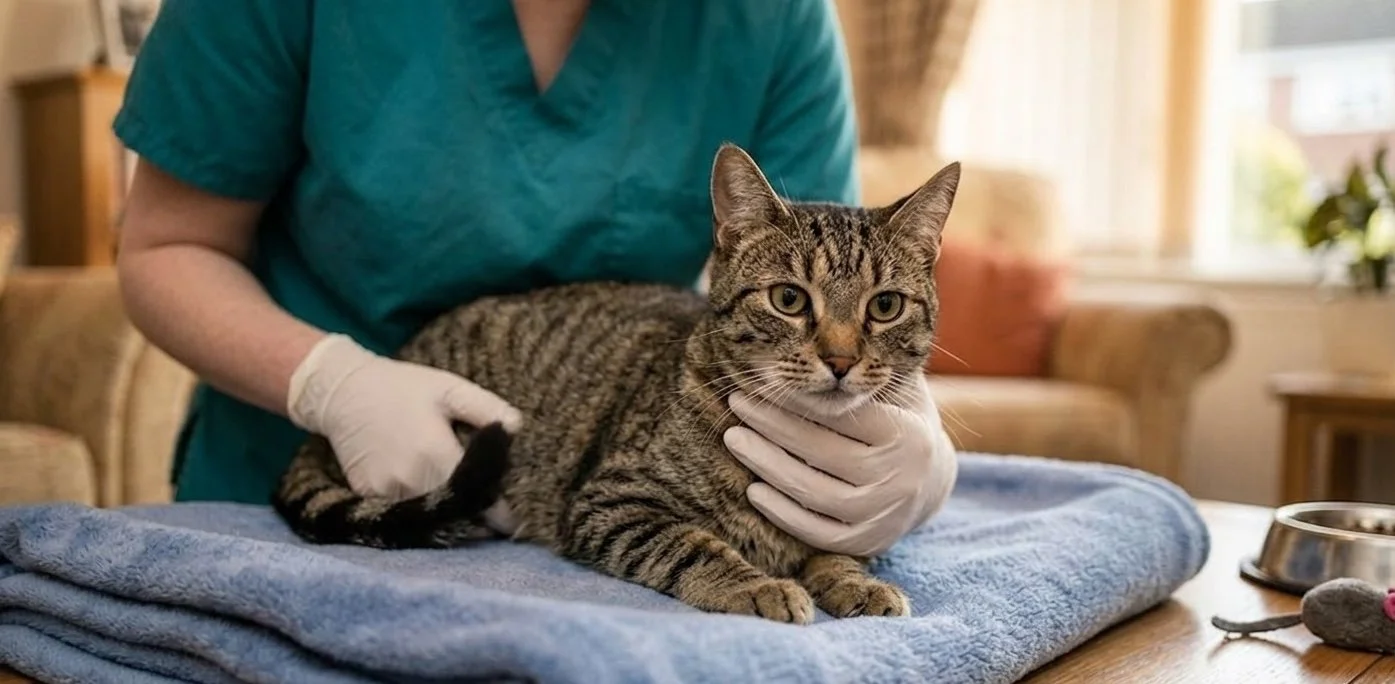
Cat being prepared for bladder expression by trained vet nurse.
Bladder Expression in Cats: When Is It Needed?
If your cat is unable to urinate on their own, it can quickly become a serious - and very life-threatening - situation. One of the ways veterinary professionals can help in these cases is through bladder expression.
As a mobile veterinary nurse service, I often support cats (and their owners) who need ongoing bladder care at home. It can feel overwhelming at first, but with the right support, many cats go on to live comfortable, happy lives.
What Is Bladder Expression?
Bladder expression is a gentle, hands-on technique used to empty a cat’s bladder when they are unable to do so naturally.
In a healthy cat, urination relies on a complex system involving the brain, spinal cord, nerves, and muscles. When something interrupts that system, the bladder may not empty properly—or at all.
Professional, Trained Support is Crucial
Why might a cat need its bladder expressed?
There are several reasons a cat may lose the ability to urinate independently. Here are the most common ones we see:
Neurological Conditions
When there is damage to the nerves that control the bladder, normal function can be disrupted.
This may be caused by:
Spinal injuries (such as being hit by a car or a fall)
Disc disease
Nerve damage
Congenital conditions
Some cats will have a soft, difficult-to-empty bladder, while others have a firm, tight bladder that requires a more specific technique.
Urinary Blockages
Urinary obstruction—especially in male cats—is an emergency.
Common causes include:
Urethral plugs
Bladder stones
Inflammation associated with feline lower urinary tract disease (FLUTD)
Bladder expression is not performed until the blockage has been relieved by a veterinarian, but some cats may need temporary help afterwards while their bladder function returns to normal.
Injury or Post-Surgical Recovery
Cats recovering from trauma or surgery may struggle to urinate due to pain, swelling, or reduced mobility.
This can include:
Pelvic fractures
Orthopaedic injuries
Car accident
‘Tail pull’ injury
These cases are sometimes permanent, but often temporary, and need careful monitoring and support.
Chronic Illness or Mobility Issues
Older or unwell cats may simply not have the strength or mobility to empty their bladder fully.
This can be seen with:
Advanced kidney disease
Severe arthritis
General weakness or debilitation
Bladder Expression Must Be Performed by a Professional
Bladder expression absolutely isn’t something to guess your way through.
Incorrect technique can cause:
Pain and distress
Bruising or internal injury
Bladder rupture
Incomplete emptying, leading to infection
Every cat is different, and the technique must be tailored to their condition, bladder type, and comfort level.
For Pet Owners: When to Seek Help
If your cat is:
Straining but not producing urine
Passing only small amounts frequently
Vocalising or showing signs of pain when toileting
Lethargic, hiding, or off food
Has a known injury or neurological condition
👉 This is urgent—please contact a veterinarian immediately.
If your cat has already been diagnosed with a condition affecting their bladder and you’ve been advised they may need assistance, that’s where a mobile vet nurse can make a big difference.
How a Mobile Vet Nurse Can Support You at Home
Caring for a cat who needs bladder expression can feel daunting—but you don’t have to do it alone.
As a mobile vet nurse, I can:
Perform gentle, professional bladder expression in your home
Monitor your cat’s bladder health and comfort
Teach and support you if home expression is needed long-term
Help you recognise early warning signs of complications
Provide ongoing care for long-term conditions (such as paralysis)
I have cared for many cats requiring bladder expression and understand the impact it can have on an owner.
Supporting Quality of Life
Cats who require bladder expression—whether short-term or ongoing—can still enjoy a great quality of life with the right care plan in place.
Early intervention, good technique, and ongoing support are key.
If you’re unsure whether your cat may need help or you’ve been advised to manage their bladder at home, reaching out for guidance is always the best first step.